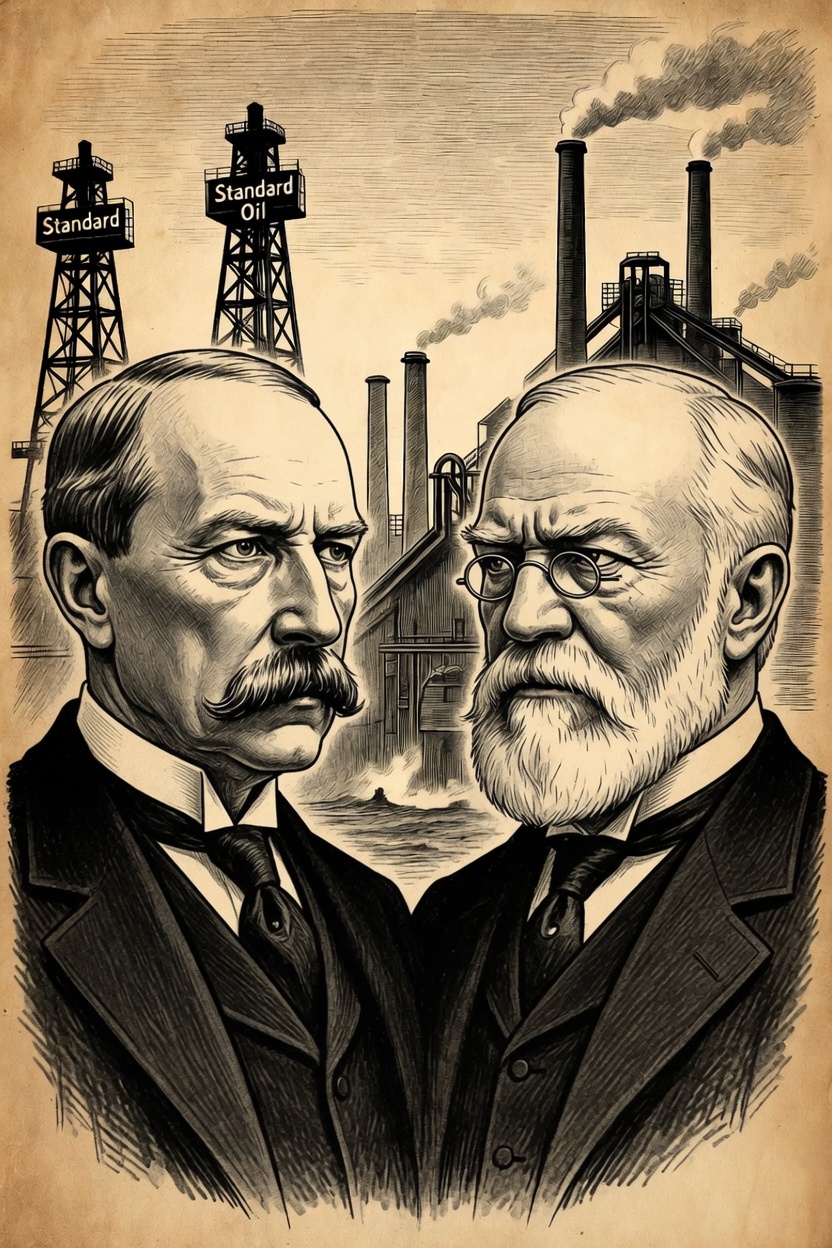
There’s a lot documented about the rivalry between Andrew Carnegie and John D. Rockefeller. Steel against oil. Two of the wealthiest men in American history, both accused in their own time of ruthless business tactics and monopolistic power. That part of the story has been told a thousand times.
This isn’t that story. This is about what happened next, when the same competitive drive that built two empires turned toward giving those empires away.

From Building Fortunes to Giving Them Away
In 1901, Carnegie sold his steel company to J.P. Morgan for $480 million, roughly the equivalent of well over ten billion dollars today, and became, briefly, the richest man in the world. He didn’t stay that way on purpose. Over the rest of his life, Carnegie gave away more than $350 million, including some $56 million to build 2,509 public libraries around the world.
Rockefeller, watching his rival give away a fortune, didn’t sit still. By the time he died in 1937, Rockefeller had given away more than $530 million. In 1919 alone, he made a single gift of $100 million, at the time the largest philanthropic gift in world history, split between the General Education Board and his own Rockefeller Foundation. That one gift alone equaled nearly 0.1 percent of the entire U.S. economy that year.
Neither man was shy about the comparison. Rockefeller had openly cited Carnegie’s example as motivation for his own giving. What had once been a competition over market share in steel and oil became, in its final act, a competition over impact. And unlike almost every other rivalry in American business history, this one is remembered as a good thing, precisely because both men treated generosity as something to compete over.
How We’re Still Feeling It Today
This isn’t just history. The decisions these two men made with their fortunes are still shaping daily life in ways most people never connect back to them.
Libraries
Of Carnegie’s 2,509 libraries, around 1,679 were built in the United States, and a meaningful number are still operating as public libraries today. One of them has a story worth telling on its own.
In 1905, an educator named Albert Meyzeek petitioned the city of Louisville, Kentucky, for a public library that African American residents could actually use, staffed by their own community, since Louisville’s library system excluded Black residents entirely at the time. The library opened that year in three rented rooms. In 1908, Carnegie’s library fund financed a permanent building at 10th and Chestnut Streets, still standing today as the Western Branch Library. Its first librarian, Thomas Fountain Blue, became the first African American in the nation to head a public library.
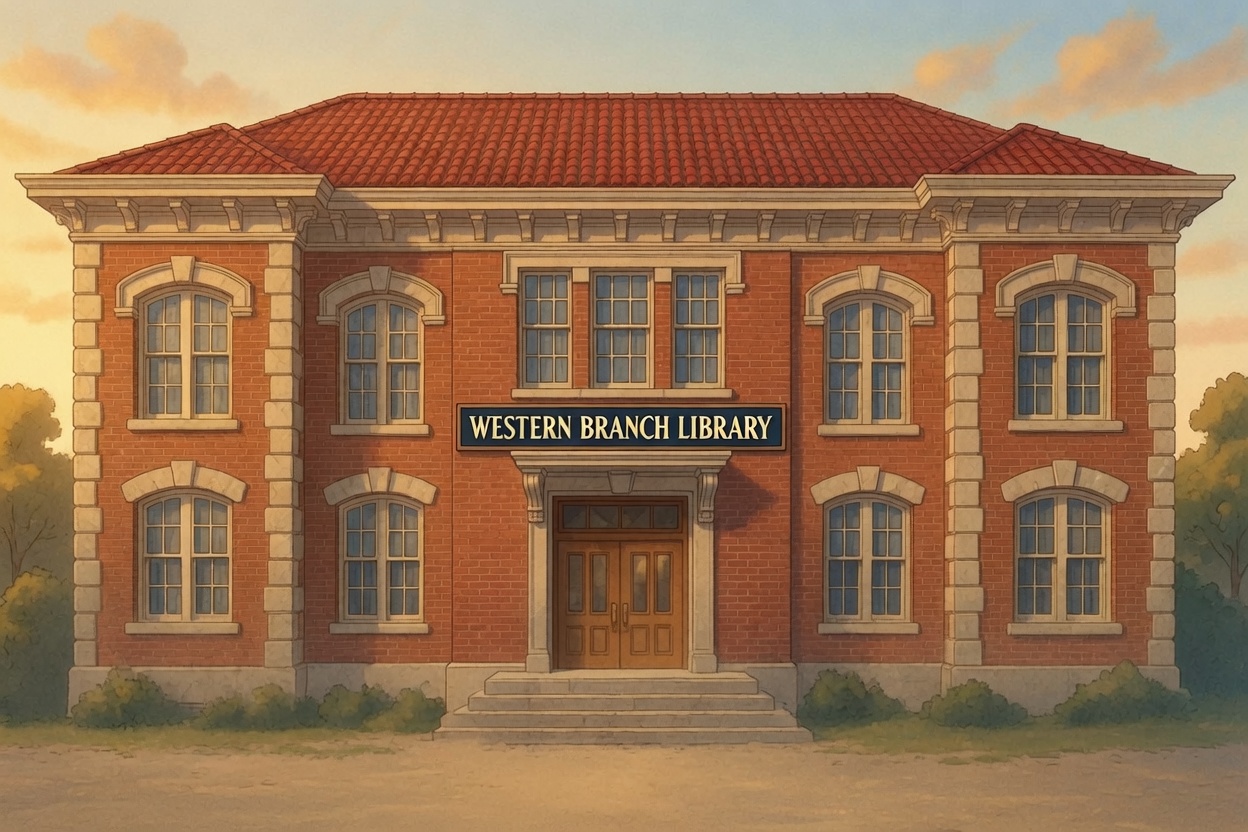
That building still serves its community more than a century later, a direct, physical result of one very wealthy man’s decision about what his fortune was for. But it almost didn’t make it that far. By 2001, the branch was facing closure, a casualty of budget cuts nearly a century after Carnegie’s money built it. That’s when Prince, the musician, made a quiet donation of $12,000 to keep it open, asking for no publicity in return. The branch survived. A library funded by one of the wealthiest men in American history was saved, decades later, by one of music’s most private acts of generosity.
Healthcare
Rockefeller’s giving reshaped American medicine at its foundation. His Sanitary Commission launched a campaign against hookworm disease across the American South, running public education efforts that reached more than 2 million people at over 25,000 public meetings. He funded the creation of the first schools of public health at Johns Hopkins and Harvard, and established what became Rockefeller University, one of the world’s leading centers of medical research to this day. The model of large-scale, foundation-funded medical research that Rockefeller pioneered is still how much of modern biomedical science gets funded.
The Arts
Carnegie’s name is still on one of the most famous concert venues in the world. Carnegie Hall, which he funded and opened in 1891 in New York City, remains one of the most prestigious performance venues on earth, still hosting concerts more than 130 years later. The Rockefeller family’s cultural footprint continued through the next generation as well, most notably in the development of Rockefeller Center and support for New York’s Museum of Modern Art, cultural landmarks that grew out of the same fortune and the same underlying instinct to put wealth toward something lasting.
The Real Lesson in the Rivalry
We tend to think of rivalries as something negative, two people or companies trying to tear each other down. Carnegie and Rockefeller’s story flips that. Their competition never stopped, it just changed direction, from who could out-earn the other to who could do the most good with what they’d earned. 1 Timothy 6:18 puts it simply: those who are rich in this present world are to do good, to be rich in good deeds, and to be generous and willing to share. Carnegie and Rockefeller, for all the criticism they earned building their fortunes, spent their final decades in a genuine contest to give those fortunes away. It’s one of the rare rivalries in history where everybody, including people not yet born when it started, ended up better off.
This content is for educational purposes only and is not personalized financial, legal, tax, or investment advice.
References and Further Reading
- Carnegie Corporation of New York: Andrew Carnegie’s Free Public Library Philanthropy
- Wikipedia: Carnegie Library
- Philanthropy Roundtable: John D. Rockefeller Sr.
- Rockefeller Archive Center: John D. Rockefeller Sr.
- Columbia University Libraries: Philanthropy of Andrew Carnegie
- Wikipedia: Louisville Free Public Library, Western Branch
- BlackPast: Louisville Western Branch Library (1905- )
 It’s All God’s
Leave a comment