Tag: generosity

  • Biltmore’s First Christmas: How the Vanderbilts Celebrated in 1895

    Biltmore’s First Christmas: How the Vanderbilts Celebrated in 1895

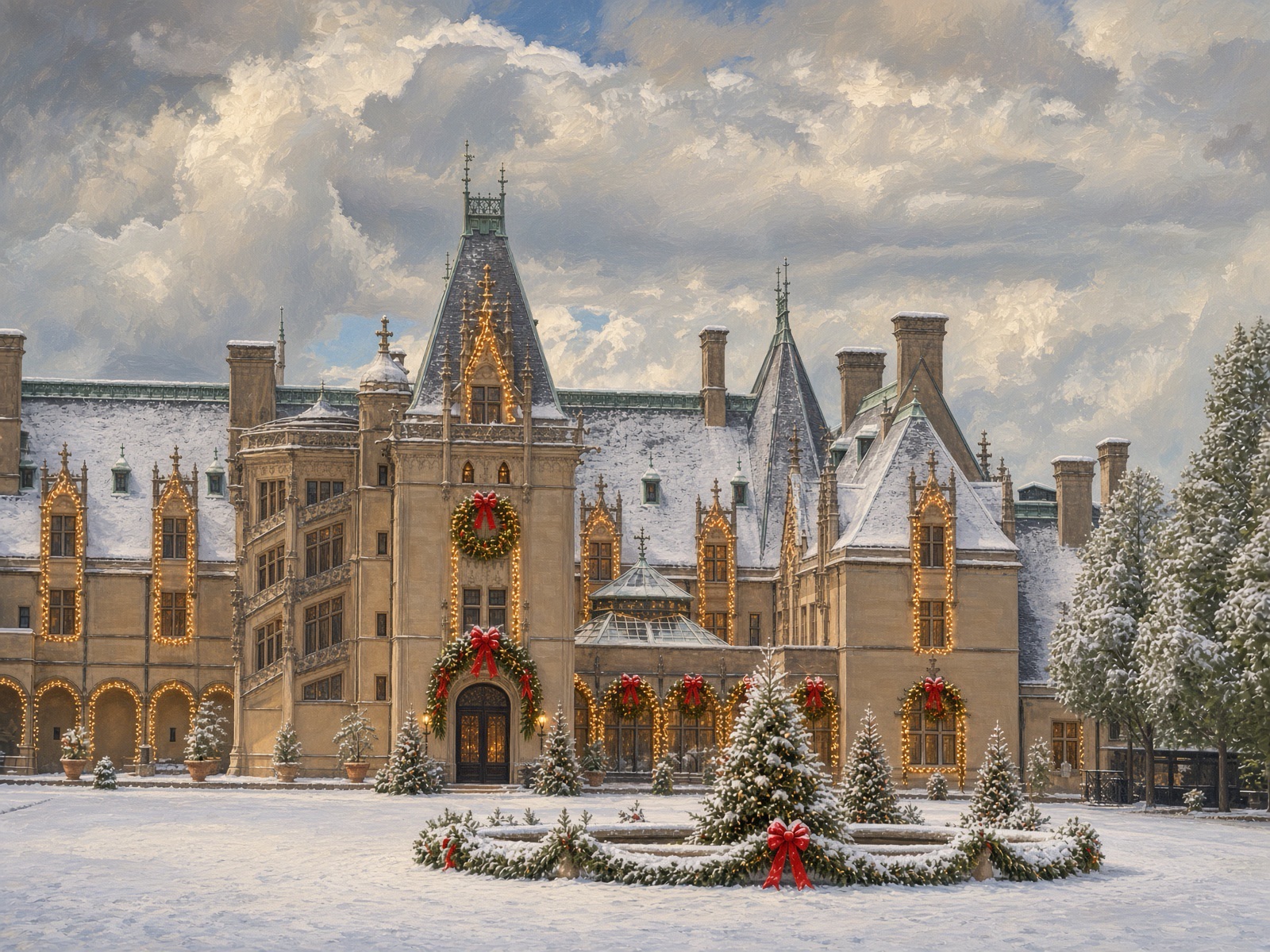
    At eleven o’clock on Christmas morning, 1895, the doors of the Banquet Hall at Biltmore House swung open. The night before, the room had been full of Vanderbilts and their friends in evening clothes. Now it filled with a different crowd: the men who had cut the stone, the women who kept the house, the farmhands, and hundreds of their children, all walking into the largest private home in America to find a Christmas tree nearly forty feet tall with presents waiting underneath it for them.

    What Was Christmas at Biltmore Like in 1895?

    Short answer: George Vanderbilt celebrated his first Christmas at Biltmore House in 1895 with family and friends, gathered on Christmas Eve around a spruce tree nearly 40 feet tall in the Banquet Hall, with music, gifts, and a long dinner. On Christmas Day he opened the same hall to his estate employees and their families. Every worker received a gift, every household received a Christmas dinner, and, according to the Asheville Citizen, each servant received an envelope with ten dollars inside. Biltmore still holds a Christmas party for its employees and their children every year.

    A House Finished Just in Time

    George Vanderbilt, the youngest son of William Henry Vanderbilt, had spent six years building his chateau in the mountains outside Asheville, North Carolina. He officially moved in on October 26, 1895, signing the first line of the house’s guest book. Two months later, he was hosting Christmas.

    He was 33 and still unmarried, but he didn’t celebrate alone. Dozens of family members and friends rode down from the north in private railcars, stepping off at the base of the hill and making their way up to the house, where George met them on the Esplanade.

    Christmas Eve in the Banquet Hall

    The centerpiece was the Banquet Hall, a room so tall it could hold a tree almost forty feet high. Evergreen garlands, holly, and mistletoe covered the mantels, and the brand-new electric lights glowed through the greenery, still a marvel in 1895. The local paper put it simply: “the guests gathered in the Banquet Hall, where there was a Christmas tree forty feet high, beautifully decorated.”

    A musical group called the Imperial Trio played. Gifts were exchanged under the tree, and dinner ran course after course, from local game to delicacies shipped down from New York. George was particular about the details. According to Biltmore’s own history, he insisted the firewood be perfectly dry, because wood left in the rain “snaps when it burns.” The celebrations stretched all the way to New Year’s Eve, when the guests toasted their host and sang in 1896 with “Auld Lang Syne.”

    Illustrated Gilded Age gentleman standing alone by a roaring fireplace in Biltmore's vast banquet hall

    Christmas Morning Belonged to the Workers

    Here’s the part of the story that rarely makes it onto the postcards. Building and running Biltmore took hundreds of people, and many of them lived on the estate with their families. On Christmas morning, George opened the Banquet Hall to all of them.

    Vanderbilt and several of his guests handed out the gifts themselves. Every estate worker received a present, and every household went home with a Christmas dinner. The Asheville Citizen reported that “each servant received an envelope containing ten dollars,” a significant sum in 1895. Some families also received their own Christmas trees and trimmings, so they could decorate their own homes. With help from a family friend, Mrs. Charles McNamee, George prepared gifts for somewhere between 300 and 500 people that year.

    Edith’s List of 600 Children

    George married Edith Stuyvesant Dresser in 1898, and she took the tradition and made it personal. Edith kept detailed lists of the employees’ children, more than 600 of them, and picked out a gift for each one by name. In 1905, the New York Times reported that nearly 1,000 children attended the Biltmore Christmas party, with gifts bought from Asheville merchants and handed out by George and Edith themselves. One of the helpers that year was the novelist Edith Wharton.

    When George died suddenly in 1914, Edith could easily have let the custom fade. Instead, she and their daughter, Cornelia, kept it going. In 1916, the party was held outdoors at Antler Hall, and the two of them posed for a photograph with Santa Claus.

    The Tradition That Outlasted the Fortune

    Most of the great Vanderbilt fortune didn’t survive the generations that followed. As we told in How the Vanderbilt Fortune Actually Disappeared, the Fifth Avenue mansions were demolished and the money ran out. Biltmore itself lost money for decades after George’s death, until his grandson turned it around, a story we cover in The Biltmore Estate: How a Vanderbilt Gamble Became a Family Empire.

    The employee Christmas party survived all of it. Today, Biltmore’s events team holds the celebration one night each November for employees and their families, with a visit from Santa and more than 300 gifts for children every year. The guest lists are kept on spreadsheets now instead of in Edith’s handwriting, but the idea is the same one George started on Christmas morning, 1895.

    What This Story Actually Teaches

    The Vanderbilts are usually remembered for what they spent on themselves: the ballrooms, the Newport cottages, the costume balls. Biltmore’s first Christmas is a reminder that the same family, in the same house, also spent its first holiday making sure the people who worked for them were seen and cared for. Proverbs 3:27 says, “Do not withhold good from those to whom it is due, when it is in your power to act.” (NIV) George Vanderbilt had more power to act than almost anyone in America. On that first Christmas, he used some of it on the people closest to his door.

    Most of us will never host a party in a banquet hall. But nearly everyone has someone whose work makes their life easier, and Christmas is a natural time to notice them. The gift doesn’t need a forty-foot tree. It just needs someone to remember their name, the way Edith did, one list at a time. Everything we have was entrusted to us, and that includes the chance to be generous with it.

    Frequently Asked Questions About Christmas at Biltmore

    When was Biltmore’s first Christmas?

    In 1895. George Vanderbilt moved into Biltmore House on October 26, 1895, and hosted family and friends there for Christmas Eve that year.

    How tall was the first Biltmore Christmas tree?

    Nearly forty feet. It was a spruce, set up in the Banquet Hall and decorated with garlands and early electric lights.

    Did George Vanderbilt give gifts to his workers?

    Yes. On Christmas Day 1895, every estate worker received a gift and every household received a Christmas dinner. The Asheville Citizen reported that each servant also received ten dollars.

    Does Biltmore still have an employee Christmas party?

    Yes. It is held one night each November for employees and their families, with more than 300 gifts given to children each year.

    Who owns Biltmore today?

    George Vanderbilt’s descendants still own it through The Biltmore Company. See who owns the Biltmore Estate today.

    This story is part of our Vanderbilt series. See every Biltmore story and the full family saga on the Vanderbilt series page.

    📖 Want the full story? Get The Vanderbilts: Empire, Excess, Loss, and Redemption — the complete ebook.

    This content is for educational purposes only and is not personalized financial advice. Scripture quotations taken from The Holy Bible, New International Version® NIV® Copyright © 1973, 1978, 1984, 2011 by Biblica, Inc.® Used by permission. All rights reserved worldwide.

    References and Further Reading

  • The $100 Million Meeting That Changed Erie, PA Forever

    The $100 Million Meeting That Changed Erie, PA Forever

    In the summer of 2007, the leaders of 46 nonprofits in Erie, Pennsylvania were each called in for a private, one-on-one meeting. Nobody knew what it was about. In the room sat a box of tissues, already waiting.

    A small meeting room with two chairs facing each other across a table, a box of tissues and an unopened envelope waiting on it

    The Gift Nobody Saw Coming

    One by one, each leader learned the same astonishing news: an anonymous donor had pledged $100 million to the Erie Community Foundation, with $85 million of it going directly, unrestricted, to their organizations. Grants ranged up to $2 million each, distributed to food banks, women’s shelters, a clinic for the blind, universities, and religious groups across the city. The tears started almost immediately.

    For a city that needed it badly, the timing mattered as much as the size. Erie was a former iron and steel town whose factories had largely closed or moved overseas by the time of the gift. The poverty rate sat at roughly 19%, about double the national average, and median household income was around $31,000, well under the roughly $48,000 national figure at the time.

    A Donor Nobody Has Ever Identified

    Mike Batchelor, president of the Erie Community Foundation, had worked with the donor for years before the announcement, quietly identifying which organizations deserved support. He was, and remains, sworn to secrecy. Asked directly whether the donor was living or dead, his answer was simply: no comment. Asked what the donor’s connection to Erie even was: no comment.

    The city responded with real restraint. Speculation swirled, naturally, but many Erie residents made a deliberate choice not to chase the mystery. “My feeling is that we’re not honoring the donor if we spend time speculating about it,” one nonprofit director told reporters at the time. To this day, decades later, the donor’s identity has never been publicly confirmed.

    A hand in shadow sliding a plain, unmarked envelope across a table, no name or signature visible

    Give Away Without the Credit

    Jesus addressed this exact posture directly in the Sermon on the Mount: “When you give to the needy, do not let your left hand know what your right hand is doing, so that your giving may be in secret.” (Matthew 6:3-4, NIV) Most large gifts of this size come with a building named after the donor, a press conference, a legacy attached to a name. This one came with none of that, by design, and the giver appears to have wanted it that way permanently, not just for a news cycle.

    A Tradition That Didn’t End There

    Erie’s story of major, community-shaping giving didn’t stop in 2007. In 2025, Erie Insurance executive Tom Hagen launched a new $100 million foundation, explicitly described as rivaling the scale of the original 2007 anonymous gift, a deliberate echo of the same spirit nearly two decades later. Whatever it is about this particular city, the instinct toward major, structural generosity has genuinely outlasted a single donor and a single decade.

    What This Story Actually Asks

    Most of us will never be in a position to give away $100 million. The size of the gift isn’t really the applicable part of this story. The posture behind it is: give in a way that doesn’t require anyone to know it was you. That’s a far harder discipline than writing a large check, and it’s available at every income level, not just an anonymous benefactor’s.

    This content is for educational purposes only and is not personalized financial or tax advice. Scripture quotations taken from The Holy Bible, New International Version® NIV® Copyright © 1973, 1978, 1984, 2011 by Biblica, Inc.® Used by permission. All rights reserved worldwide.

    References and Further Reading

  • 6 Ways Dolly Parton Used Her Fame to Help Others

    6 Ways Dolly Parton Used Her Fame to Help Others

    A governor from one party and a governor from the other party stood on the same stage in Nashville in 2005. Dolly Parton stood between them, joked that she felt “torn between two governors,” and then got back to the actual point of the event: celebrating ten years of a program that had nothing to do with politics and everything to do with getting books into the hands of kids who needed them.

    That scene captures something Dolly understood better than most celebrities: fame is a tool, and a tool is only as good as what you build with it. Following her death on August 25, 2026, here are six verified ways she put her platform to work for people who needed it more than she did.

    1. She Scaled a Local Book Drive Into a Global Program

    The Imagination Library started small in 1995 — free books for children in Dolly’s home county, inspired by her father, who never learned to read. Because Dolly’s name carried weight, the program didn’t stay small. It expanded into the United States, Canada, the United Kingdom, Australia, and the Republic of Ireland, eventually gifting more than 270 million free books to children by 2025 — over 40 million in that year alone.

    2. She Personally Lobbied Governors to Fund It

    Dolly didn’t just start the Imagination Library and let it run — she actively used her celebrity to keep state funding behind it. In 2025, when Indiana’s governor proposed cutting the state’s funding match, Dolly and the Dollywood Foundation publicly pushed back, and the funding was preserved. She made a similar personal push in Ohio, where the governor declared an official “Dolly Parton Day” tied to the program’s growth in that state.

    3. She Gave the 100 Millionth Book to the Library of Congress

    In February 2018, Dolly personally delivered the 100 millionth Imagination Library book to the Library of Congress in Washington, D.C. It wasn’t just a nice photo — it was a deliberate use of a national spotlight to put childhood literacy on the map at the highest level of visibility available to her.

    4. She Turned Award Speeches Into Advocacy

    Dolly Parton performing joyfully on stage under warm spotlights

    When Dolly accepted the Carnegie Medal of Philanthropy in 2022 — one of the field’s highest honors — she used the moment not to talk about her career, but to talk about the Imagination Library and the simple principle behind all her giving: “I just see a need and if I can fill it, then I will.” Time and again, her acceptance speeches functioned as free advertising for causes rather than victory laps for herself.

    5. She Made Disaster Relief a Household Story

    When Dolly gave to wildfire victims in 2016 and Hurricane Helene victims in 2024, the giving itself mattered — but so did the fact that a global celebrity was doing it publicly, from her own home region. Her visibility turned regional disasters into national news, drawing additional donations and attention to East Tennessee relief efforts that a private, anonymous donor never could have generated.

    6. She Let Her Fame Point Somewhere Other Than Herself

    Perhaps the clearest evidence: when Tennessee lawmakers wanted to build her a statue, she declined, explaining that a season of division wasn’t the time to put anyone on a pedestal. “I get paid more attention than maybe some others that are doing more than me,” she once said, “[but] I hope that attention inspires more people to help others.” That’s the through-line in every item on this list — attention, spent on someone else’s behalf.

    A Platform Worth Something Beyond the Platform

    Jesus told His followers, “In the same way, let your light shine before others, that they may see your good deeds and glorify your Father in heaven” (Matthew 5:16, NIV). Dolly Parton’s fame could have stopped at entertainment. Instead, again and again, she pointed it at a need — a child without books, a family without a home, a community without a hospital — and let the light land somewhere other than herself.

    References

    • Rolling Stone Australia, “Turning Pages: Inside Dolly Parton’s Imagination Library”
    • Fox News, “Dolly Parton Urges Indiana Governor Not to Cut Funds for Her Imagination Library,” February 2025
    • Axios, “Dolly Parton Celebrates Her Imagination Library Program,” 2022
    • PBS NewsHour, “Dolly Parton’s Donation Strategy Is to Just Give From My Heart,” 2022
    • MS NOW, “Dolly Parton Was So Much More Than Her Music,” August 2026

    Scripture quotations taken from The Holy Bible, New International Version® NIV® Copyright © 1973, 1978, 1984, 2011 by Biblica, Inc.® Used by permission. All rights reserved worldwide.


    Part of Our Dolly Parton Tribute Series

    See the full Dolly Parton Tribute Series.

  • 7 Incredible Stories of Dolly Parton’s Generosity

    7 Incredible Stories of Dolly Parton’s Generosity

    In the fall of 2016, wildfires tore through the Great Smoky Mountains, destroying more than 2,400 homes and businesses in and around Gatlinburg, Tennessee. Families who had lived there for generations stood in the ash of everything they owned. Within days, one woman had a plan: $1,000 a month, for six months, to every family who lost their main home — no paperwork maze, no means test, just help.

    That woman was Dolly Parton, and the fund she created became just one chapter in a lifetime of giving. Dolly Parton died on August 25, 2026, at age 80. In her memory, here are seven verified stories of her generosity — the kind rooted not in publicity but in a simple, oft-repeated philosophy: “I just see a need and if I can fill it, then I will.”

    1. The Imagination Library: Over 304 Million Free Kids Books

    Dolly’s father, Robert Lee Parton, never learned to read. In 1995, inspired by that fact, she started a simple program in her home county: every enrolled child, from birth to age five, would receive one free, age-appropriate hardcover book in the mail every single month — regardless of the family’s income. There’s no test, no application fee, and no cost ever passed to parents. The first book every child receives is The Little Engine That Could; the last, sent right before kindergarten, is Look Out, Kindergarten, Here I Come.

    The math behind it is part of what makes it remarkable: a child enrolled at birth receives 60 books by the time they start school — a personal home library built one mailbox delivery at a time, before they’ve ever set foot in a classroom. The program runs on a shared-funding model. The Dollywood Foundation covers overhead and negotiates bulk pricing on the books themselves, while local partners — libraries, nonprofits, churches, and state governments — fundraise to cover mailing costs in their own communities. That structure is what allowed a local Sevier County idea to scale into a program now mailing more than 3 million books every month across five countries: the United States, Canada, the United Kingdom, Australia, and the Republic of Ireland. By the end of 2025, the total stood at 304,539,509 books gifted since the program began.

    The impact isn’t just anecdotal. The largest shared book-reading study ever conducted — tracking more than 86,000 families across all five countries — found that children in the program were nine times more likely to show real interest in books and fifteen times more likely to actively join in during reading time, compared to children not enrolled. Caregivers in the program became six times more likely to count images with their child and seven times more likely to describe what’s happening in a picture together. Kindergarten-readiness studies in states like Colorado and Washington found enrolled children outperforming their peers on early literacy assessments before they ever reached a classroom. In practical terms: for every single child enrolled, the program isn’t just handing over a stack of books — it’s building a reading habit, a parent-child ritual, and a measurable head start, one month at a time, for five years straight.

    2. The Buddy Program: Paying Kids to Stay in School

    In 1988, Dolly founded the Dollywood Foundation with a specific, local problem in mind: too many students in Sevier County, Tennessee were dropping out of high school before graduation. Her solution was as personal as it was practical. Every 7th and 8th grader was paired with a “buddy” — a fellow student — and the two of them made a mutual promise to help each other stay in school all the way through to a diploma. If both students graduated, Dolly gave each of them $500.

    It wasn’t just a bribe to finish school — it was designed around relationship and mutual accountability, built into a community that Dolly knew from the inside. The results were dramatic: the dropout rate among Sevier County students fell from roughly 35 percent to just 6 percent. Just as importantly, the program’s early success catalyzed the wider community to keep investing in local education long after the initial Buddy Program cohorts graduated, turning a one-time incentive into a lasting shift in local expectations around finishing school.

    3. $75,000 a Year in College Scholarships

    Beyond the Buddy Program, the Dollywood Foundation awards five $15,000 Dolly Parton Scholarships every single year — $75,000 annually, without fail, to graduating seniors from Sevier County high schools. The scholarships aren’t handed out on GPA alone; students have to articulate an actual dream and a real plan for pursuing it, then defend that plan to be selected. It’s a small but telling detail: Dolly’s giving, even at the institutional level, tended to ask something of the recipient in return — not gratitude, but a real vision for what the money would be used to build.

    4. The My People Fund: Over $12 Million for Wildfire Survivors

    On November 28, 2016, wildfires swept through Sevier County — Dolly’s home county — destroying the homes of more than 1,000 families. Dolly asked the Dollywood Foundation to lead the relief effort, and in just two weeks, the Foundation designed and launched the My People Fund from scratch: $1,000 a month, for six months, to every family whose primary residence was completely destroyed. No committees, no drawn-out applications — cash in hand, fast, for people who had just lost everything.

    By the time the Foundation closed out distribution in May 2017, the My People Fund had delivered more than $12 million to displaced families. Dolly didn’t stop at short-term relief, either — she also established a Wildfire Scholarship Fund, offering $4,500 scholarships to high school juniors and seniors whose homes had burned, specifically so that a disaster that had already cost these families everything wouldn’t also cost them their future plans for college.

    5. $1 Million to Vanderbilt Children’s Hospital — A Personal Cause

    Dolly gave $1 million to Monroe Carell Jr. Children’s Hospital at Vanderbilt, one of the region’s leading pediatric care centers. Unlike some of her larger, more headline-grabbing gifts, this one had a direct, personal thread running through it: Dolly’s own niece had been treated at Vanderbilt for leukemia. Rather than treat that experience as a private family matter, Dolly turned it into an institutional gift — a reminder that some of her most significant giving came from places of direct, lived gratitude rather than distant charity.

    6. Turning a Benefit Concert Into a Hospital

    In 2007, Sevier County needed a full-service hospital closer to home, rather than families having to travel long distances for serious medical care. Dolly contributed $500,000 of her own money toward the project, then did something only someone with her level of fame could do: she headlined a benefit concert and raised another $500,000 on top of it — roughly $1 million combined. That funding helped open the LeConte Medical Center in 2010, which today also houses the Dolly Parton Center for Women’s Services. It’s one of the clearest examples in her giving history of treating her own celebrity as a fundraising instrument, not just her personal checkbook.

    7. $2 Million in Hurricane Helene Relief

    In late 2024, Hurricane Helene tore through East Tennessee and western North Carolina, flooding towns and displacing families across the region — including areas close to Dolly’s own home turf. She personally donated $1 million to the Mountain Ways Foundation, a fund established specifically to direct relief to the hardest-hit mountain communities. Her businesses, including Dollywood, matched that gift with another $1 million, bringing the total to $2 million — the same pattern she’d used with the wildfires eight years earlier: personal money, business money, and her platform, all pointed at the same need at the same time.

    And That’s Far From All of It

    Seven stories barely scratch the surface. Dolly also gave $1 million to Vanderbilt University Medical Center in 2020, funding early-stage COVID-19 research that helped support work related to the Moderna vaccine. She spent decades as a partner behind the Eagle Mountain Sanctuary at Dollywood, supporting bald eagle rehabilitation and conservation since 1990. And in 2021, when Tennessee lawmakers proposed a statue in her honor, she asked them not to build it — at least not yet.

    A Legacy Bigger Than the Dollar Amount

    Scripture says, “Each of you should give what you have decided in your heart to give, not reluctantly or under compulsion, for God loves a cheerful giver” (2 Corinthians 9:7, NIV). What stands out across all these stories isn’t just the size of the gifts — it’s that Dolly rarely gave once and walked away. She built systems: a scholarship fund, a foundation, a research fund, a book program that still runs today, in five countries, more than three million times a month. Give, build a system, scale it, and keep giving — a pattern that ran through sixty years of her life, echoing a much older American tradition of turning enormous personal wealth into lasting institutions, one Andrew Carnegie and John D. Rockefeller pioneered a century earlier in their own race to give it all away.

    Keep Her Work Going

    If any of these stories moved you, both organizations Dolly built are still active and accepting support:

    References

    • Dolly Parton’s Imagination Library, 2025 Year in Review; International Research summary, imaginationlibrary.com
    • Dollywood Foundation, official program pages (Buddy Program, Dolly Parton Scholarships, LeConte Medical Center)
    • Vanderbilt University Medical Center, “Dolly Parton Makes Generous Gift to Advance COVID-19 Research”
    • NBC News, “Dolly Parton Donates to Hurricane Helene Relief,” 2024
    • Mountain Ways Foundation, public disclosures
    • American Eagle Foundation, financial statements
    • Colorado Evaluation & Action Lab / Imagination Library of Washington, kindergarten readiness research, 2025

    Scripture quotations taken from The Holy Bible, New International Version® NIV® Copyright © 1973, 1978, 1984, 2011 by Biblica, Inc.® Used by permission. All rights reserved worldwide.


    Part of Our Dolly Parton Tribute Series

    See the full Dolly Parton Tribute Series.

  • Chuck Feeney: The Billionaire Who Secretly Gave Away $8 Billion

    Chuck Feeney: The Billionaire Who Secretly Gave Away $8 Billion

    When Chuck Feeney died in 2023 at age 92, Forbes reported his net worth at roughly $2 million. Decades earlier, he’d been worth well over a billion. The math isn’t a story of loss. It’s a story of a man who spent 40 years deliberately giving away more than $8 billion, almost entirely in secret, and considered the job successfully finished.

    An elderly man in simple clothing carrying a plastic bag walks through a busy airport terminal surrounded by travelers in suits with designer luggage

    Building the Fortune

    Born in 1931 to a modest, working-class family in New Jersey, Feeney co-founded Duty Free Shoppers with Robert Miller in 1960, opening duty-free retail locations for international travelers, first in Hong Kong and Honolulu. When Japan lifted travel restrictions on its citizens in 1966, Feeney, who had learned Japanese, built relationships with tour operators that turned the company into a global retail empire. By 1988, Forbes estimated his fortune at $1.3 billion, placing him among the 20 richest people in America.

    Forbes had no idea they’d made a significant error. By the time that estimate was published, Feeney had already quietly transferred the overwhelming majority of his wealth away.

    The Secret That Lasted 15 Years

    In 1982, Feeney established Atlantic Philanthropies. Two years later, he transferred his entire 38.75% stake in Duty Free Shoppers, along with the bulk of his other personal assets, into the foundation. His real net worth from that point on was a small fraction of what Forbes and the public believed.

    Almost nobody knew. Feeney required grant recipients to keep the source of their funding confidential, and he personally avoided publicity for over a decade. The arrangement only became public in 1997, when a legal dispute with his former business partner over the sale of Duty Free Shoppers to LVMH forced the details into the open. Feeney got ahead of it by contacting reporters directly rather than letting the story leak through the lawsuit. Forbes later nicknamed him “the James Bond of philanthropy.”

    “Giving While Living”

    An elderly man's hands signing a document at a plain wooden desk with a city skyline blurred in the window behind him

    Feeney’s core philosophy broke from how most major philanthropy has traditionally worked. Rather than leaving a fortune to a foundation that would distribute it gradually after his death, Feeney set out to give away essentially everything while he was still alive to see the results. “I did not want money to consume my life,” he said. “There’s just a limit to what you need.”

    Atlantic Philanthropies funded education, public health, human rights, and reconciliation efforts across the U.S., Ireland, Vietnam, South Africa, Australia, and Bermuda, more than $8 billion in total grants. Feeney set a hard deadline for the foundation to spend down completely and close its doors, which it did in 2020, four decades after it began and three years before his death.

    A Life That Didn’t Match the Fortune

    Feeney was known for wearing a $15 watch, carrying papers in a plastic bag instead of a briefcase, flying economy class, and living in a modest rented apartment in San Francisco in his final years. His frugality wasn’t a performance for a media narrative, it was consistent with how he lived decades before anyone knew what he’d given away.

    His example directly inspired two of the most famous names in modern philanthropy. Warren Buffett called Feeney “the model for us all,” and both Buffett and Bill Gates have credited him as a direct influence in creating The Giving Pledge in 2010, the commitment through which many of the world’s wealthiest individuals have pledged to give away the majority of their fortunes. Feeney’s radical generosity followed in a much older tradition, one that traces back to Andrew Carnegie and John D. Rockefeller’s own race to give it all away a century earlier.

    What This Story Actually Teaches

    Feeney’s story pushes against two common instincts at once: the instinct to give publicly, for recognition, and the instinct to give later, once there’s more, once retirement comes, once the estate is being settled. Proverbs 19:17 says, “Whoever is generous to the poor lends to the Lord, and he will repay him for his deed.” (NIV) Feeney’s version of that generosity wasn’t a single grand gesture. It was four decades of consistent, deliberate, often invisible decisions to give rather than accumulate, right up until the accumulation itself had nothing left to show for it, by design. It’s the same quiet consistency behind a Mississippi washerwoman’s gift of $150,000, built one load of laundry at a time.

    Chuck Feeney: Common Questions

    How much did Chuck Feeney give away?

    More than $8 billion, through his foundation, Atlantic Philanthropies, over about 40 years.

    What was Chuck Feeney’s net worth when he died?

    About $2 million, according to Forbes. He had once been worth well over a billion, and he gave nearly all of it away on purpose.

    What does “giving while living” mean?

    It means giving your wealth away during your lifetime so you can see the good it does, instead of leaving it all to be handed out after you die.

    Did Chuck Feeney inspire the Giving Pledge?

    Yes. Warren Buffett and Bill Gates both credited him as an influence when they started the Giving Pledge in 2010. His story also shows that wealth itself isn’t the problem, what matters is what we do with it. For more on that, see Is It a Sin to Be Rich? What the Bible Actually Says.

    This content is for educational purposes only and is not personalized financial or tax advice. Scripture quotations taken from The Holy Bible, New International Version® NIV® Copyright © 1973, 1978, 1984, 2011 by Biblica, Inc.® Used by permission. All rights reserved worldwide.

    References and Further Reading

  • Oseola McCarty: The Washerwoman Who Gave Her Life Savings to Students

    Oseola McCarty: The Washerwoman Who Gave Her Life Savings to Students

    In 1995, a university in Mississippi received a gift of $150,000 to fund scholarships for students who couldn’t otherwise afford to attend. That kind of gift usually comes from a corporation, a wealthy alumnus, or a family foundation. This one came from an 87-year-old woman who had spent her entire life washing other people’s clothes by hand.

    Painting-style portrait of an elderly Black woman doing laundry by hand at a washboard outside a modest wood-frame home

    A Life of Quiet, Steady Work

    Oseola McCarty was born in 1908 in rural Mississippi. She left school in the sixth grade to care for a sick aunt and never went back. For the next 75 years, she made her living as a washerwoman in Hattiesburg, scrubbing other families’ laundry by hand with a washboard, day after day, for a few dollars a load.

    She never married. She never owned a car, walking or riding with friends everywhere she needed to go, including nearly a mile pushing a shopping cart for cheaper groceries. She lived simply, in the same modest home for most of her adult life, and she saved. Not aggressively, not with any investment strategy beyond consistency, just steadily setting money aside from decades of physically demanding work that most people would consider barely enough to live on, let alone save from.

    A Faith Practiced Long Before the Headlines

    Her generosity in 1995 wasn’t a sudden decision. It was the visible tip of something she had practiced quietly for over 70 years. McCarty was a lifelong member of Friendship Baptist Church in Hattiesburg, riding with friends to services since she never owned a car. She read her Bible every morning and prayed on her knees every evening, a discipline reporters who visited her small home in the 1990s noted as simply part of her daily routine, not something performed for their benefit.

    She tithed from her laundry earnings for decades before anyone outside Hattiesburg knew her name. In her own words, recalling her decades of saving: every coin she earned went into the bank, except for what she dropped in the collection plate at Friendship Baptist. Nobody had instructed her to do it. It simply felt right to return part of what she’d been given. When asked by national reporters why she gave away almost everything instead of spending it on herself, her answer was the same verse Christians have leaned on for 2,000 years: it is more blessed to give than to receive.

    Even in the formality of settling her estate, her church came first. According to the bank trust officer who helped her allocate her savings using a literal handful of dimes to represent percentages, the first dime she placed, before any relative’s share, went on the card marked for Friendship Baptist Church.

    The Gift Nobody Saw Coming

    By 1995, arthritis had forced McCarty to retire. She had quietly accumulated $280,000. She set aside enough to live on, gave a portion to her church, and made small gifts to three relatives. Then she donated $150,000, the bulk of what remained, to the University of Southern Mississippi to establish a scholarship fund for Black students who needed financial help to attend.

    It’s worth sitting with the irony here: the University of Southern Mississippi hadn’t even admitted Black students until the 1960s. When asked why she chose that school specifically rather than a historically Black college, McCarty’s answer was characteristically plain: “Because it’s here. It’s close.” Years later, reflecting on the gift, she put it even more simply: “I don’t regret one penny I gave.”

    The Ripple Effect

    A university student moved to tears while reading a letter at her desk, dorm room with family photos and BSU laptop visible

    Her gift didn’t stay a single, isolated act. News of an elderly washerwoman giving away her life savings spread nationally, and it moved people. Local business leaders matched her gift almost immediately, and within four years, more than 600 additional donors had given, growing the fund to nearly $250,000. Harvard awarded her an honorary doctorate. President Bill Clinton presented her with the Presidential Citizens Medal. She died in 1999, four years after making the gift.

    The giving never stopped. By 2014, the endowment had topped $700,000. In March 2025, the USM Foundation announced it had officially reached a full $1 million corpus, funded by roughly 1,400 donors in total across 30 years, timed deliberately to mark what would have been McCarty’s 117th birthday. That $1 million now generates $2,000 scholarships for 20 students every single year, and 133 students total have been helped by the fund across its history. In 2018, USM built on her legacy further, creating the Oseola McCarty Scholars Program, a structured leadership and financial-wellness program for recipients, not simply a check, explicitly built around her work ethic and servant attitude. In 2026, her actual home in Hattiesburg opened to the public as a museum preserving her story for future generations.

    What Made This Different

    McCarty’s gift wasn’t remarkable because of its size. Plenty of wealthy donors have given more without anyone remembering their names a year later. What made it remarkable was the ratio: a woman who never earned more than a modest wage in her life gave away the overwhelming majority of everything she had, built dollar by dollar over 75 years of physical labor most people never see and rarely think about, faith practiced quietly the entire way through.

    Matthew 25:21 records Jesus commending a servant with the words, “Well done, good and faithful servant! You have been faithful with a few things; I will put you in charge of many things.” (NIV) The parable is about stewardship of what’s entrusted to us, not about the size of the starting amount. McCarty’s whole life reads like a real-world illustration of exactly that principle. She was faithful with a washboard, a collection plate, and a few dollars a load for most of a century, and what she built from that faithfulness ended up outlasting her by decades and reshaping the lives of students she never met.

    The Actual Lesson

    It would be easy to read this story and conclude the lesson is simply “save more.” That undersells it. The real lesson is that consistency, in saving and in giving alike, compounds in ways that feel invisible in the moment and undeniable in hindsight. Nobody watching Oseola McCarty do laundry in 1960, or 1975, or 1990, dropping a portion into the collection plate every week without being asked, would have guessed her savings would eventually outgrow itself into a seven-figure scholarship fund still changing lives 30 years later, and counting. Faithfulness in something small, sustained over a lifetime, produced something genuinely large. That’s not a coincidence. It’s usually how it actually works. It’s a pattern that shows up again and again in stories of radical generosity, from a duty-free retail billionaire who quietly gave away $8 billion to a country music icon whose generosity reshaped entire communities.

    Oseola McCarty: Common Questions

    How much did Oseola McCarty give?

    $150,000, most of her life savings, to fund scholarships at the University of Southern Mississippi.

    Why did she choose the University of Southern Mississippi?

    Her answer was simple: it was close to home in Hattiesburg.

    What church did Oseola McCarty attend?

    Friendship Baptist Church in Hattiesburg. She gave to her church from her laundry earnings for decades. If you’re wondering how giving like hers fits with what the Bible teaches, see Is the 10% Tithe a Biblical Command or a Guideline?

    How big is her scholarship fund today?

    It reached $1 million in 2025, funded by about 1,400 donors, and it helps 20 students every year. Like the widow Jesus praised for her two small coins, her gift was never about the size. It was about how much of herself she gave.

    This content is for educational purposes only and is not personalized financial or tax advice. Scripture quotations taken from The Holy Bible, New International Version® NIV® Copyright © 1973, 1978, 1984, 2011 by Biblica, Inc.® Used by permission. All rights reserved worldwide.

    References and Further Reading

  • The Widow’s Mite: Why Jesus Praised the Smallest Gift in the Temple

    The Widow’s Mite: Why Jesus Praised the Smallest Gift in the Temple

    Picture the scene: a busy temple courtyard, wealthy men in fine robes stepping forward one by one to drop large sums into the temple treasury, the clink of coins loud enough to turn heads. Then a poor widow steps up, and quietly drops in two small coins worth barely a fraction of a cent combined. Jesus, watching the whole thing, tells his disciples something that would have stopped them cold: she gave more than all the rest.

    Illustration of wealthy robed figures dropping large amounts of coin into an ornate ancient temple treasury box

    The Scene, in Detail

    The story appears in both Mark 12:41-44 and Luke 21:1-4. Jesus was sitting near the temple treasury, watching people put in their gifts, a public act in that era, since the treasury consisted of trumpet-shaped receptacles where coins were audibly dropped in. Many rich people, Mark tells us, put in large sums. Then one poor widow came and put in two small copper coins, worth together about a penny.

    Jesus called his disciples over specifically to make a point of it. “Truly I tell you,” he said, “this poor widow has put in more than all the others. They gave out of their abundance, but she, out of her poverty, put in everything she had, all she had to live on.” (NIV)

    What the Greek Reveals

    Two small details from the original language add real weight to this story. The coins she gave were called lepta (λεπτά), the smallest, lowest-value coin in circulation at the time, literally meaning “thin” or “small.” It was about as low as currency got.

    And the phrase “all she had to live on” translates the Greek word bios (βίος), which doesn’t simply mean money or savings. It means life itself, the same root behind our word “biology.” Mark isn’t just saying she gave her spare cash. The word choice says she gave her livelihood.

    Why This Isn’t About the Amount

    The math, on its face, doesn’t work in any normal accounting sense. Two small coins are not more than the large sums the wealthy donors gave, not by any measure of pure quantity. Jesus isn’t making a math argument. He’s redefining what generosity actually measures.

    The wealthy donors gave out of their abundance, meaning what they gave cost them nothing they’d actually feel. Their lifestyle didn’t change. Their security wasn’t touched. The widow gave everything she had left to live on, an act that put her next meal in question. Jesus measures the gift not by its size but by what it actually cost the giver.

    A Detail Easy to Miss

    Illustration of a poor widow dropping two small coins into the temple treasury as Jesus, depicted with authentic Middle Eastern features, and his disciples watch nearby

    It’s worth noticing that Jesus doesn’t tell the widow to stop, doesn’t intervene to suggest she’s being reckless with her last money, and doesn’t hold her up as someone who made a poor financial decision. He holds her up as the standard. This sits alongside other places in the Gospels where Jesus shows real concern for the poor and vulnerable, which makes his silence here notable. He doesn’t correct her. He commends her.

    That doesn’t mean this passage is a command for everyone to give away their entire livelihood. It’s describing what he saw in one specific act of worship, not laying out a universal financial strategy. But it does mean the passage can’t be softened into merely being about the size of a check.

    What This Actually Asks of Us

    If Jesus measures giving by cost rather than size, the practical question for anyone today isn’t how does my gift compare to what other people give. It’s did this actually require something from me. A wealthy person giving a large sum that doesn’t change their lifestyle at all isn’t automatically living out this passage just because the number looks generous. Someone giving a smaller amount that genuinely costs them something might be living it out more fully than they realize.

    This isn’t a passage designed to make anyone feel guilty about their income level or their capacity to give. It’s a reframe: the size of the number was never the point God was measuring. The heart behind it was.

    This content is for educational purposes only and is not personalized financial or tax advice. Scripture quotations taken from The Holy Bible, New International Version® NIV® Copyright © 1973, 1978, 1984, 2011 by Biblica, Inc.® Used by permission. All rights reserved worldwide.

    References and Further Reading

  • Carnegie vs. Rockefeller: How Their Rivalry Became a Race to Give It All Away

    Carnegie vs. Rockefeller: How Their Rivalry Became a Race to Give It All Away

    There’s a lot documented about the rivalry between Andrew Carnegie and John D. Rockefeller. Steel against oil. Two of the wealthiest men in American history, both accused in their own time of ruthless business tactics and monopolistic power. That part of the story has been told a thousand times.

    This isn’t that story. This is about what happened next, when the same competitive drive that built two empires turned toward giving those empires away.

    Vintage newspaper style cartoon illustration of John D Rockefeller and Andrew Carnegie facing each other, with Standard Oil derricks behind Rockefeller and steel mills behind Carnegie

    From Building Fortunes to Giving Them Away

    In 1901, Carnegie sold his steel company to J.P. Morgan for $480 million, roughly the equivalent of well over ten billion dollars today, and became, briefly, the richest man in the world. He didn’t stay that way on purpose. Over the rest of his life, Carnegie gave away more than $350 million, including some $56 million to build 2,509 public libraries around the world.

    Rockefeller, watching his rival give away a fortune, didn’t sit still. By the time he died in 1937, Rockefeller had given away more than $530 million. In 1919 alone, he made a single gift of $100 million, at the time the largest philanthropic gift in world history, split between the General Education Board and his own Rockefeller Foundation. That one gift alone equaled nearly 0.1 percent of the entire U.S. economy that year.

    Neither man was shy about the comparison. Rockefeller had openly cited Carnegie’s example as motivation for his own giving. What had once been a competition over market share in steel and oil became, in its final act, a competition over impact. And unlike almost every other rivalry in American business history, this one is remembered as a good thing, precisely because both men treated generosity as something to compete over.

    How We’re Still Feeling It Today

    This isn’t just history. The decisions these two men made with their fortunes are still shaping daily life in ways most people never connect back to them.

    Libraries

    Of Carnegie’s 2,509 libraries, around 1,679 were built in the United States, and a meaningful number are still operating as public libraries today. One of them has a story worth telling on its own.

    In 1905, an educator named Albert Meyzeek petitioned the city of Louisville, Kentucky, for a public library that African American residents could actually use, staffed by their own community, since Louisville’s library system excluded Black residents entirely at the time. The library opened that year in three rented rooms. In 1908, Carnegie’s library fund financed a permanent building at 10th and Chestnut Streets, still standing today as the Western Branch Library. Its first librarian, Thomas Fountain Blue, became the first African American in the nation to head a public library.

    Warm illustrated depiction of the historic Western Branch Library in Louisville Kentucky

    That building still serves its community more than a century later, a direct, physical result of one very wealthy man’s decision about what his fortune was for. But it almost didn’t make it that far. By 2001, the branch was facing closure, a casualty of budget cuts nearly a century after Carnegie’s money built it. That’s when Prince, the musician, made a quiet donation of $12,000 to keep it open, asking for no publicity in return. The branch survived. A library funded by one of the wealthiest men in American history was saved, decades later, by one of music’s most private acts of generosity.

    Healthcare

    Rockefeller’s giving reshaped American medicine at its foundation. His Sanitary Commission launched a campaign against hookworm disease across the American South, running public education efforts that reached more than 2 million people at over 25,000 public meetings. He funded the creation of the first schools of public health at Johns Hopkins and Harvard, and established what became Rockefeller University, one of the world’s leading centers of medical research to this day. The model of large-scale, foundation-funded medical research that Rockefeller pioneered is still how much of modern biomedical science gets funded.

    The Arts

    Carnegie’s name is still on one of the most famous concert venues in the world. Carnegie Hall, which he funded and opened in 1891 in New York City, remains one of the most prestigious performance venues on earth, still hosting concerts more than 130 years later. The Rockefeller family’s cultural footprint continued through the next generation as well, most notably in the development of Rockefeller Center and support for New York’s Museum of Modern Art, cultural landmarks that grew out of the same fortune and the same underlying instinct to put wealth toward something lasting.

    The Real Lesson in the Rivalry

    We tend to think of rivalries as something negative, two people or companies trying to tear each other down. Carnegie and Rockefeller’s story flips that. Their competition never stopped, it just changed direction, from who could out-earn the other to who could do the most good with what they’d earned. 1 Timothy 6:18 puts it simply: those who are rich in this present world are to do good, to be rich in good deeds, and to be generous and willing to share. Carnegie and Rockefeller, for all the criticism they earned building their fortunes, spent their final decades in a genuine contest to give those fortunes away. It’s one of the rare rivalries in history where everybody, including people not yet born when it started, ended up better off.

    📖 Now Available: The Full Book

    The Vanderbilts: Empire, Excess, Loss, and Redemption book cover

    If this rivalry between Gilded Age titans caught your attention, our new book traces another one of that era’s legendary families across four generations, illustrated, with practical lessons on stewardship in every chapter. Get The Vanderbilts: Empire, Excess, Loss, and Redemption as an ebook today.

    This content is for educational purposes only and is not personalized financial, legal, tax, or investment advice.

    References and Further Reading

  • 3 Incredible Stories of Generosity from Early Church History

    3 Incredible Stories of Generosity from Early Church History

    Christianity’s reputation for radical generosity didn’t start with a modern charity or a famous philanthropist. It started in the earliest decades of the church, recorded by the believers themselves and, tellingly, by outsiders who couldn’t help but notice.

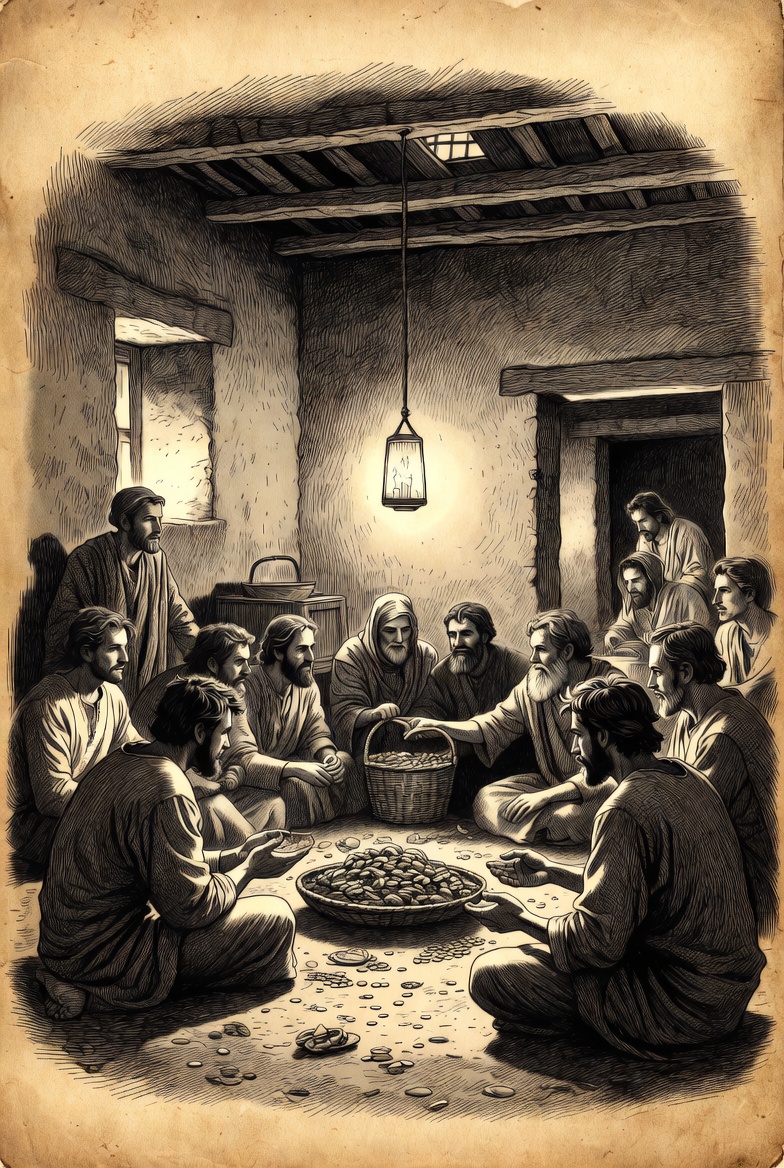
    Illustration of early believers gathered indoors in warm candlelight, sharing a meal and a common collection

    1. Barnabas Sells His Field

    Acts 4:32-37 describes the Jerusalem church in its earliest days: believers so united that no one claimed personal ownership of their possessions, and everything was shared so completely that there wasn’t a needy person among them. The passage singles out one man by name, Joseph, a Levite from Cyprus whom the apostles nicknamed Barnabas, “son of encouragement.” He sold a field he owned and laid the entire proceeds at the apostles’ feet, no strings attached, to be distributed to whoever needed it.

    What makes this remarkable isn’t just the size of the gift, it’s that Barnabas gave up a real, tangible asset, land, something most people in that era held onto as the foundation of family security, and did it voluntarily, as an act of trust rather than obligation.

    2. Justin Martyr’s Sunday Collection

    By the mid-second century, roughly a hundred years after Barnabas, the church had grown far beyond Jerusalem, and its giving had become organized without losing its heart. Justin Martyr, a Christian philosopher writing around 150-160 AD, described what happened during the weekly Sunday gathering: those who were prosperous and willing gave what they judged appropriate, and what was collected was placed with the leader of the congregation, who used it to care for orphans and widows.

    This is one of the earliest outside descriptions we have of organized Christian charity, written not as church marketing but as a straightforward explanation of Christian practice to a skeptical Roman audience. Care for the most vulnerable, the fatherless and the widowed, was baked into how the church operated from this remarkably early date.

    3. Tertullian’s Fund for the Persecuted

    Illustration representing early Christians providing aid to those imprisoned for their faith

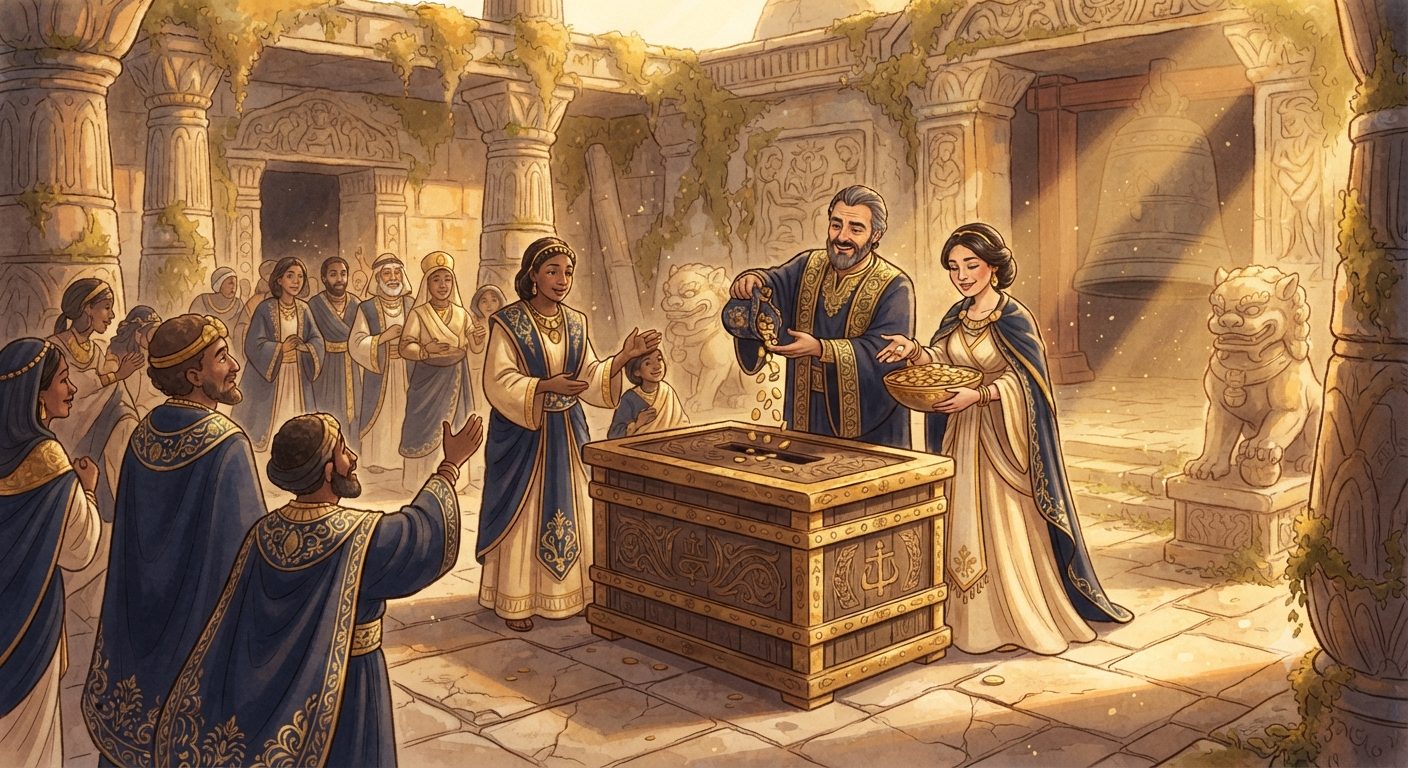
    By around 197 AD, the church father Tertullian described a monthly voluntary collection, what he called a “treasure chest” that was never purchased at the price of a religion, meaning giving was never a fee for membership. What was gathered went to feed the poor and bury them, to support orphaned children and the elderly, and, strikingly, to care for those who had been shipwrecked or imprisoned simply for their faith. In a time when helping a prisoner of the Roman state could bring real danger to the giver, Christians were funding aid for exactly those people.

    Why This Still Matters

    None of these stories come from Christians bragging about their own generosity. Two of the three come from Christian writers explaining their faith to a watching, often hostile, outside world, and the generosity was simply part of the explanation. The pattern across all three, personal sacrifice, organized care for the vulnerable, and giving that carried real risk, set a standard the church has been measuring itself against ever since. 2 Corinthians 9:7 sums up the spirit behind all of it: God loves a cheerful giver, not one who gives reluctantly or under compulsion. The early church seems to have taken that seriously, at real cost to themselves.

    This content is for educational purposes only and is not personalized financial, legal, or tax advice.

    References and Further Reading