
Ask ten Christians what tithing means and you’ll likely get ten different answers. Some will tell you it’s a strict 10% off the top, non-negotiable. Others will say it’s an Old Testament rule that doesn’t apply to New Testament believers at all. Both sides have real Scripture behind them. Here’s the actual history.

Where the Tithe Came From
The tithe shows up early in the Old Testament, well before the Law of Moses. Abraham gave a tenth of the spoils of battle to Melchizedek, king of Salem and priest of God Most High, in Genesis 14. Jacob vowed a tenth of everything God gave him in Genesis 28. By the time of Moses, tithing had become codified law: Israelites were commanded to bring a tenth of their crops and livestock to support the Levites, the tribe set apart for the priesthood and temple service, since the Levites received no land inheritance of their own (Leviticus 27:30-32, Numbers 18:21).
This wasn’t charity in the modern sense. It was closer to a national tax that funded Israel’s entire religious and social infrastructure, including provision for the poor, the foreigner, the widow, and the orphan (Deuteronomy 14:28-29).
Did the Early Church Tithe?
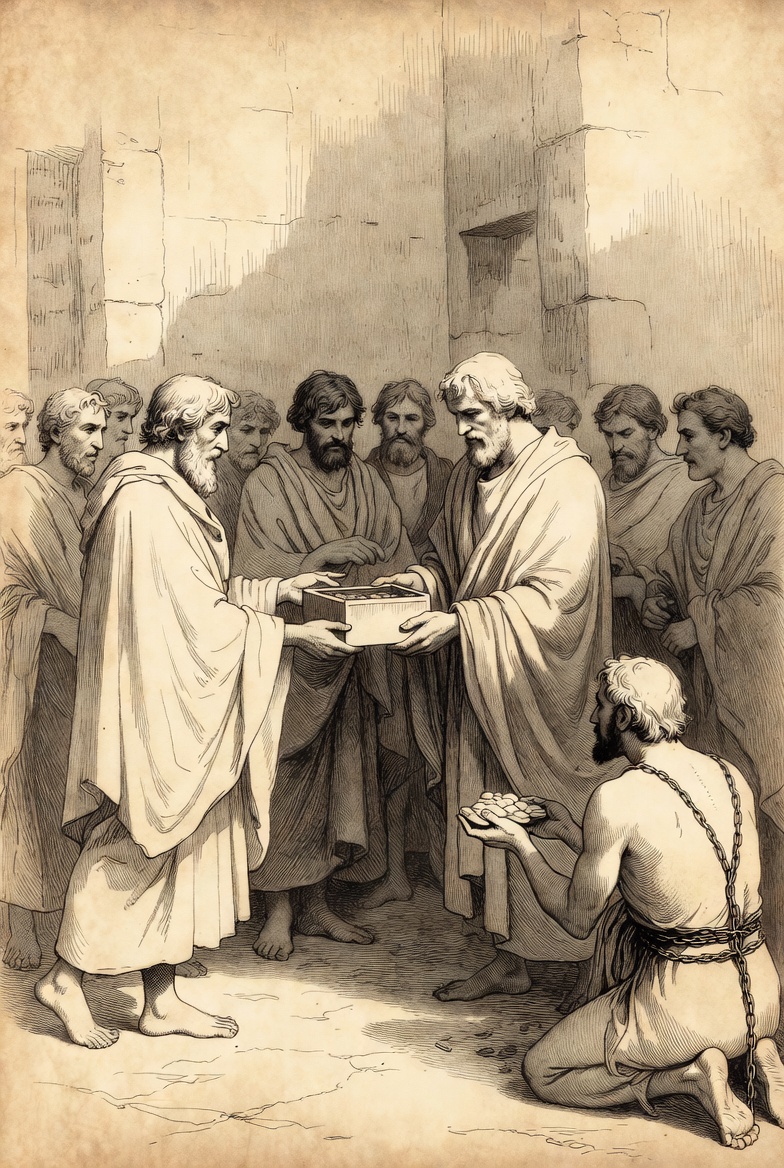
This is where it gets genuinely debated, and worth being honest about rather than picking a side and pretending it’s obvious. The New Testament never explicitly commands a 10% tithe for Christians. The early church in Acts didn’t run on a fixed percentage, it ran on radical, voluntary generosity, believers selling property and laying the proceeds at the apostles’ feet, giving as anyone had need (Acts 2:44-45, Acts 4:32-35).
Paul’s instructions to the Corinthian church point the same direction. He tells believers to set aside a portion of their income “as he may prosper” (1 Corinthians 16:2), and later urges cheerful, willing giving rather than giving under compulsion or by a fixed rule (2 Corinthians 9:7). Some Christian scholars, including writers like Stuart Murray Williams, argue directly that the tithe was a Mosaic Law requirement never carried forward as binding on New Testament believers, replaced instead by proportional, Spirit-led generosity.
Other traditions push back, pointing out that tithing predates the Law of Moses entirely (Abraham gave his tithe centuries before Sinai), and that Jesus himself affirmed tithing practice while criticizing those who tithed meticulously but neglected justice and mercy (Matthew 23:23), suggesting he saw it as a floor, not something to be abandoned.
Same 10% for the Wealthy and the Poor?
This is the practical question that matters most, and it’s worth sitting with rather than rushing past. A flat 10% is a very different sacrifice for someone earning $30,000 a year than for someone earning $3 million. Jesus made exactly this point when he watched a poor widow give two small coins at the temple, and told his disciples she had given more than all the wealthy donors combined, because she gave out of her poverty while they gave out of their abundance (Mark 12:41-44, Luke 21:1-4).
That story doesn’t settle the tithing debate, but it does settle something else: God has never measured generosity by the size of the number. He measures it by what it actually costs the giver. Whatever position a Christian lands on regarding a fixed 10%, the widow’s example suggests the real question isn’t “did I hit the percentage,” but “did this giving actually require faith and sacrifice from me.” For a closer look at that exact debate, see our piece on whether the 10% tithe is a biblical command or a guideline.
Where This Leaves Us

This site isn’t going to tell you which side of the tithing debate is correct, since faithful, Bible-believing Christians land in different places on this one. What we will say is this: whether you land on a strict 10%, a percentage that grows as you’re able, or Paul’s “as you have prospered” principle, the goal was never a number for its own sake. It was always a heart posture, that everything you have already belongs to God, and giving is simply putting that belief into practice. If you’re wondering why this topic doesn’t come up more often from the pulpit, we’ve written about that too: 7 reasons churches need to preach more on tithing.
This content is for educational purposes only and is not personalized financial, legal, or tax advice.
Leave a Reply