Tag: history

  • A Brief History of Tithing: What the Bible Actually Says

    A Brief History of Tithing: What the Bible Actually Says

    Ask ten Christians what tithing means and you’ll likely get ten different answers. Some will tell you it’s a strict 10% off the top, non-negotiable. Others will say it’s an Old Testament rule that doesn’t apply to New Testament believers at all. Both sides have real Scripture behind them. Here’s the actual history.

    Where Did Tithing Come From?

    Short answer: The first tithe in the Bible is in Genesis 14, when Abram (later Abraham) gave a tenth to Melchizedek, king of Salem and priest of God Most High. That was centuries before the Law of Moses. Later, the Law made the tithe a command for Israel: a tenth of crops and livestock to support the Levites, the temple and the poor (Leviticus 27:30-32, Numbers 18:21, Deuteronomy 14:28-29). Whether that command still binds Christians today is a real debate, and we lay out both sides below.

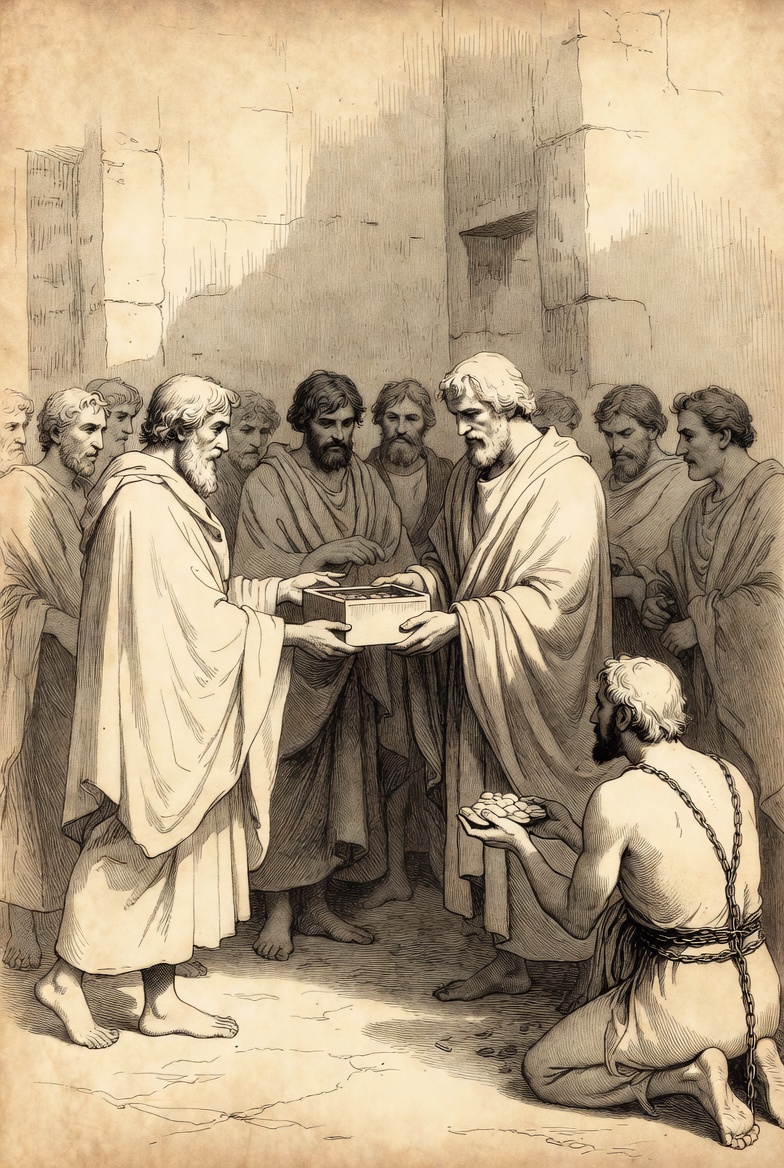
    Illustration of ancient Israelite figures in robes exchanging a tithe offering

    Where the Tithe Came From

    The tithe shows up early in the Old Testament, well before the Law of Moses. Abraham gave a tenth of the spoils of battle to Melchizedek, king of Salem and priest of God Most High, in Genesis 14. Jacob vowed a tenth of everything God gave him in Genesis 28. By the time of Moses, tithing had become codified law: Israelites were commanded to bring a tenth of their crops and livestock to support the Levites, the tribe set apart for the priesthood and temple service, since the Levites received no land inheritance of their own (Leviticus 27:30-32, Numbers 18:21).

    This wasn’t charity in the modern sense. It was closer to a national tax that funded Israel’s entire religious and social infrastructure, including provision for the poor, the foreigner, the widow, and the orphan (Deuteronomy 14:28-29).

    Did the Early Church Tithe?

    This is where it gets genuinely debated, and worth being honest about rather than picking a side and pretending it’s obvious. The New Testament never explicitly commands a 10% tithe for Christians. The early church in Acts didn’t run on a fixed percentage, it ran on radical, voluntary generosity, believers selling property and laying the proceeds at the apostles’ feet, giving as anyone had need (Acts 2:44-45, Acts 4:32-35).

    Paul’s instructions to the Corinthian church point the same direction. He tells believers to set aside a portion of their income “as he may prosper” (1 Corinthians 16:2), and later urges cheerful, willing giving rather than giving under compulsion or by a fixed rule (2 Corinthians 9:7). Some Christian scholars, including writers like Stuart Murray Williams, argue directly that the tithe was a Mosaic Law requirement never carried forward as binding on New Testament believers, replaced instead by proportional, Spirit-led generosity.

    Other traditions push back, pointing out that tithing predates the Law of Moses entirely (Abraham gave his tithe centuries before Sinai), and that Jesus himself affirmed tithing practice while criticizing those who tithed meticulously but neglected justice and mercy (Matthew 23:23), suggesting he saw it as a floor, not something to be abandoned.

    Same 10% for the Wealthy and the Poor?

    This is the practical question that matters most, and it’s worth sitting with rather than rushing past. A flat 10% is a very different sacrifice for someone earning $30,000 a year than for someone earning $3 million. Jesus made exactly this point when he watched a poor widow give two small coins at the temple, and told his disciples she had given more than all the wealthy donors combined, because she gave out of her poverty while they gave out of their abundance (Mark 12:41-44, Luke 21:1-4).

    That story doesn’t settle the tithing debate, but it does settle something else: God has never measured generosity by the size of the number. He measures it by what it actually costs the giver. Whatever position a Christian lands on regarding a fixed 10%, the widow’s example suggests the real question isn’t “did I hit the percentage,” but “did this giving actually require faith and sacrifice from me.” For a closer look at that exact debate, see our piece on whether the 10% tithe is a biblical command or a guideline.

    Where This Leaves Us

    Illustration of a family giving generously together, warm and heartfelt

    This site isn’t going to tell you which side of the tithing debate is correct, since faithful, Bible-believing Christians land in different places on this one. What we will say is this: whether you land on a strict 10%, a percentage that grows as you’re able, or Paul’s “as you have prospered” principle, the goal was never a number for its own sake. It was always a heart posture, that everything you have already belongs to God, and giving is simply putting that belief into practice. If you’re wondering why this topic doesn’t come up more often from the pulpit, we’ve written about that too: 7 reasons churches need to preach more on tithing.

    Frequently Asked Questions About the History of Tithing

    Who gave the first tithe in the Bible?

    Abram, later called Abraham. In Genesis 14:18-20 he gave Melchizedek, king of Salem and priest of God Most High, a tenth after a military victory. Hebrews 7 looks back on that same moment.

    Where is tithing first mentioned in Genesis?

    Twice. Genesis 14:20 records Abram’s tenth to Melchizedek. Genesis 28:22 records Jacob’s vow to give God a tenth of everything God gave him.

    Was tithing part of the Law of Moses?

    Yes. The Law commanded Israel to give a tenth of crops and livestock (Leviticus 27:30-32). It supported the Levites, who had no land of their own (Numbers 18:21), and helped care for foreigners, orphans and widows (Deuteronomy 14:28-29). But the practice is older than the Law, which is one reason Christians still debate whether it applies today.

    When did tithing become money?

    In ancient Israel, tithes were mostly crops and animals. Deuteronomy 14:24-26 let a family that lived too far from the place of worship sell its tithe for silver, carry the silver, and buy food there instead. Giving in coins and, later, paper money grew as economies moved from farming to wages. Many Christians today ask a related question: should you tithe on gross or net income?

    Did the early church tithe?

    The New Testament never sets a fixed percentage for Christians. The church in Acts gave freely and often far beyond 10%. See 3 incredible stories of generosity from early church history.

    This content is for educational purposes only and is not personalized financial, legal, or tax advice.

    References and Further Reading

  • Carnegie vs. Rockefeller: How Their Rivalry Became a Race to Give It All Away

    Carnegie vs. Rockefeller: How Their Rivalry Became a Race to Give It All Away

    There’s a lot documented about the rivalry between Andrew Carnegie and John D. Rockefeller. Steel against oil. Two of the wealthiest men in American history, both accused in their own time of ruthless business tactics and monopolistic power. That part of the story has been told a thousand times.

    This isn’t that story. This is about what happened next, when the same competitive drive that built two empires turned toward giving those empires away.

    Vintage newspaper style cartoon illustration of John D Rockefeller and Andrew Carnegie facing each other, with Standard Oil derricks behind Rockefeller and steel mills behind Carnegie

    From Building Fortunes to Giving Them Away

    In 1901, Carnegie sold his steel company to J.P. Morgan for $480 million, roughly the equivalent of well over ten billion dollars today, and became, briefly, the richest man in the world. He didn’t stay that way on purpose. Over the rest of his life, Carnegie gave away more than $350 million, including some $56 million to build 2,509 public libraries around the world.

    Rockefeller, watching his rival give away a fortune, didn’t sit still. By the time he died in 1937, Rockefeller had given away more than $530 million. In 1919 alone, he made a single gift of $100 million, at the time the largest philanthropic gift in world history, split between the General Education Board and his own Rockefeller Foundation. That one gift alone equaled nearly 0.1 percent of the entire U.S. economy that year.

    Neither man was shy about the comparison. Rockefeller had openly cited Carnegie’s example as motivation for his own giving. What had once been a competition over market share in steel and oil became, in its final act, a competition over impact. And unlike almost every other rivalry in American business history, this one is remembered as a good thing, precisely because both men treated generosity as something to compete over.

    How We’re Still Feeling It Today

    This isn’t just history. The decisions these two men made with their fortunes are still shaping daily life in ways most people never connect back to them.

    Libraries

    Of Carnegie’s 2,509 libraries, around 1,679 were built in the United States, and a meaningful number are still operating as public libraries today. One of them has a story worth telling on its own.

    In 1905, an educator named Albert Meyzeek petitioned the city of Louisville, Kentucky, for a public library that African American residents could actually use, staffed by their own community, since Louisville’s library system excluded Black residents entirely at the time. The library opened that year in three rented rooms. In 1908, Carnegie’s library fund financed a permanent building at 10th and Chestnut Streets, still standing today as the Western Branch Library. Its first librarian, Thomas Fountain Blue, became the first African American in the nation to head a public library.

    Warm illustrated depiction of the historic Western Branch Library in Louisville Kentucky

    That building still serves its community more than a century later, a direct, physical result of one very wealthy man’s decision about what his fortune was for. But it almost didn’t make it that far. By 2001, the branch was facing closure, a casualty of budget cuts nearly a century after Carnegie’s money built it. That’s when Prince, the musician, made a quiet donation of $12,000 to keep it open, asking for no publicity in return. The branch survived. A library funded by one of the wealthiest men in American history was saved, decades later, by one of music’s most private acts of generosity.

    Healthcare

    Rockefeller’s giving reshaped American medicine at its foundation. His Sanitary Commission launched a campaign against hookworm disease across the American South, running public education efforts that reached more than 2 million people at over 25,000 public meetings. He funded the creation of the first schools of public health at Johns Hopkins and Harvard, and established what became Rockefeller University, one of the world’s leading centers of medical research to this day. The model of large-scale, foundation-funded medical research that Rockefeller pioneered is still how much of modern biomedical science gets funded.

    The Arts

    Carnegie’s name is still on one of the most famous concert venues in the world. Carnegie Hall, which he funded and opened in 1891 in New York City, remains one of the most prestigious performance venues on earth, still hosting concerts more than 130 years later. The Rockefeller family’s cultural footprint continued through the next generation as well, most notably in the development of Rockefeller Center and support for New York’s Museum of Modern Art, cultural landmarks that grew out of the same fortune and the same underlying instinct to put wealth toward something lasting.

    The Real Lesson in the Rivalry

    We tend to think of rivalries as something negative, two people or companies trying to tear each other down. Carnegie and Rockefeller’s story flips that. Their competition never stopped, it just changed direction, from who could out-earn the other to who could do the most good with what they’d earned. 1 Timothy 6:18 puts it simply: those who are rich in this present world are to do good, to be rich in good deeds, and to be generous and willing to share. Carnegie and Rockefeller, for all the criticism they earned building their fortunes, spent their final decades in a genuine contest to give those fortunes away. It’s one of the rare rivalries in history where everybody, including people not yet born when it started, ended up better off.

    📖 Now Available: The Full Book

    The Vanderbilts: Empire, Excess, Loss, and Redemption book cover

    If this rivalry between Gilded Age titans caught your attention, our new book traces another one of that era’s legendary families across four generations, illustrated, with practical lessons on stewardship in every chapter. Get The Vanderbilts: Empire, Excess, Loss, and Redemption as an ebook today.

    This content is for educational purposes only and is not personalized financial, legal, tax, or investment advice.

    References and Further Reading

  • Commodore Vanderbilt: From Ferry Boy to Railroad Titan (And the Rival Who Challenged His Empire)

    Commodore Vanderbilt: From Ferry Boy to Railroad Titan (And the Rival Who Challenged His Empire)

    In 1810, a sixteen-year-old boy borrowed $100 from his mother and bought a small boat to ferry passengers and freight around New York harbor. By the time he died sixty-seven years later, that boy, Cornelius Vanderbilt, was the richest man in American history, worth more than the U.S. Treasury itself held in cash at the time.

    Illustration of a young Cornelius Vanderbilt as a teenage ferry boy on New York harbor

    From Ferries to an Empire

    Vanderbilt earned the nickname “Commodore” the hard way, building a shipping empire boat by boat, route by route, undercutting competitors and outworking nearly everyone in the business. By his 60s, when most men of his era were long retired, he made an audacious pivot: he sold off his shipping interests and threw his fortune into something newer and riskier, railroads.

    It worked. Vanderbilt consolidated smaller lines into the New York Central Railroad, one of the most powerful rail networks in the country, and in 1871 opened Grand Central Depot in Manhattan, the direct ancestor of today’s Grand Central Terminal. By the time of his death in 1877, he had amassed roughly $100 million, an almost incomprehensible fortune for the era.

    The Titan

    Illustration of an older, formally dressed man representing Cornelius Vanderbilt as a railroad titan

    By the early 1870s, Vanderbilt sat atop what looked like an unshakeable empire. But a much younger, far less famous man was quietly building something that would eventually test even a fortune as large as his.

    The Rival Nobody Saw Coming

    John D. Rockefeller started small in the 1860s, one refinery among dozens in Cleveland, Ohio. But by 1872 he had already begun aggressively consolidating the oil refining business under his company, Standard Oil, buying out 22 of Cleveland’s 26 refineries in a matter of weeks.

    That same year, Rockefeller and a group of refiners and railroad men formed the South Improvement Company, a scheme to secure secret rebates on oil shipments in exchange for guaranteed, high-volume freight business. The railroads at the table included the Erie, the Pennsylvania, and Vanderbilt’s own New York Central, by then increasingly run day to day by his son, William Henry Vanderbilt, as the aging Commodore’s health declined. The deal offered the railroads reliable volume and offered Rockefeller drastically lower shipping costs than his competitors could get, a real threat to the balance of power the railroads had grown used to controlling.

    The scheme leaked to the press within weeks and collapsed under public backlash before it could fully take hold. But it revealed something important: the era of the unchallenged railroad titan was already ending, and a new kind of industrial power, built on oil instead of iron rails, was rising fast enough to make even Vanderbilt’s empire take notice.

    What This Story Actually Teaches

    It’s tempting to read Vanderbilt’s story as simply a rags-to-riches tale, and it is one. But it’s also a reminder that no fortune, no matter how large, stays unchallenged forever. Vanderbilt himself proved that by displacing established shipping and rail interests on his way up. Within a generation of his death, a new kind of empire was already testing the limits of his family’s. Ecclesiastes 2:18-19 captures the tension well: the Preacher grieves that he must leave the fruit of his labor to someone who comes after him, and he has no idea whether that person will be wise or foolish with it. Vanderbilt built one of the largest fortunes the world had ever seen. What happened to it in the hands of the generations after him is a story worth telling on its own, and we will, starting with the son the Commodore almost didn’t trust with any of it, and the surprising, complicated relationship he’d go on to have with the very man who’d just tested his father’s empire.

    📖 Want the full story? Get The Vanderbilts: Empire, Excess, Loss, and Redemption — the complete ebook.

    The Full Vanderbilt Series

    Or see the full series hub page for the complete story, including practical lessons drawn from it.

    Lessons from the Commodore’s story: 5 Ways the Commodore’s Decision Protected the Family, Lifestyle Creep: The Real Lesson Hiding in the Vanderbilt Story, and What Is an Asset? And meet the man building a fortune in the same city at the same time: John Jacob Astor.

    This content is for educational purposes only and is not personalized financial, legal, tax, or investment advice.

    References and Further Reading

  • 3 Incredible Stories of Generosity from Early Church History

    3 Incredible Stories of Generosity from Early Church History

    Christianity’s reputation for radical generosity didn’t start with a modern charity or a famous philanthropist. It started in the earliest decades of the church, recorded by the believers themselves and, tellingly, by outsiders who couldn’t help but notice.

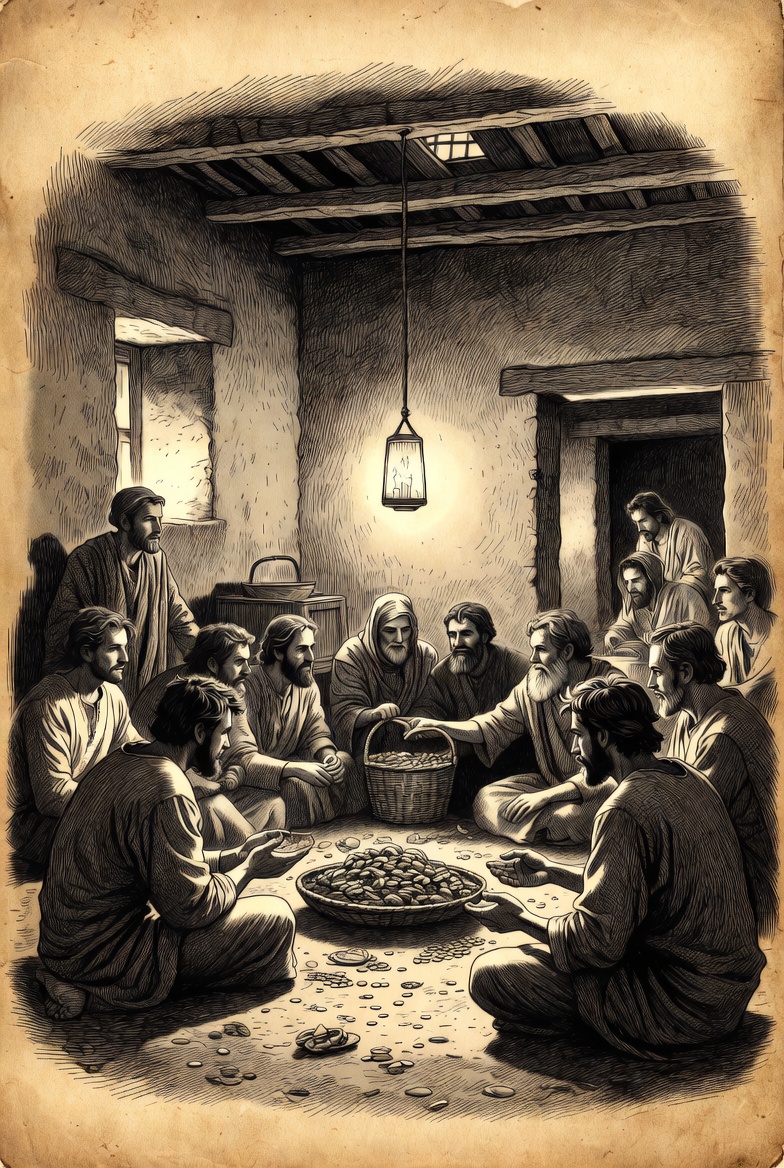
    Illustration of early believers gathered indoors in warm candlelight, sharing a meal and a common collection

    1. Barnabas Sells His Field

    Acts 4:32-37 describes the Jerusalem church in its earliest days: believers so united that no one claimed personal ownership of their possessions, and everything was shared so completely that there wasn’t a needy person among them. The passage singles out one man by name, Joseph, a Levite from Cyprus whom the apostles nicknamed Barnabas, “son of encouragement.” He sold a field he owned and laid the entire proceeds at the apostles’ feet, no strings attached, to be distributed to whoever needed it.

    What makes this remarkable isn’t just the size of the gift, it’s that Barnabas gave up a real, tangible asset, land, something most people in that era held onto as the foundation of family security, and did it voluntarily, as an act of trust rather than obligation.

    2. Justin Martyr’s Sunday Collection

    By the mid-second century, roughly a hundred years after Barnabas, the church had grown far beyond Jerusalem, and its giving had become organized without losing its heart. Justin Martyr, a Christian philosopher writing around 150-160 AD, described what happened during the weekly Sunday gathering: those who were prosperous and willing gave what they judged appropriate, and what was collected was placed with the leader of the congregation, who used it to care for orphans and widows.

    This is one of the earliest outside descriptions we have of organized Christian charity, written not as church marketing but as a straightforward explanation of Christian practice to a skeptical Roman audience. Care for the most vulnerable, the fatherless and the widowed, was baked into how the church operated from this remarkably early date.

    3. Tertullian’s Fund for the Persecuted

    Illustration representing early Christians providing aid to those imprisoned for their faith

    By around 197 AD, the church father Tertullian described a monthly voluntary collection, what he called a “treasure chest” that was never purchased at the price of a religion, meaning giving was never a fee for membership. What was gathered went to feed the poor and bury them, to support orphaned children and the elderly, and, strikingly, to care for those who had been shipwrecked or imprisoned simply for their faith. In a time when helping a prisoner of the Roman state could bring real danger to the giver, Christians were funding aid for exactly those people.

    Why This Still Matters

    None of these stories come from Christians bragging about their own generosity. Two of the three come from Christian writers explaining their faith to a watching, often hostile, outside world, and the generosity was simply part of the explanation. The pattern across all three, personal sacrifice, organized care for the vulnerable, and giving that carried real risk, set a standard the church has been measuring itself against ever since. 2 Corinthians 9:7 sums up the spirit behind all of it: God loves a cheerful giver, not one who gives reluctantly or under compulsion. The early church seems to have taken that seriously, at real cost to themselves.

    This content is for educational purposes only and is not personalized financial, legal, or tax advice.

    References and Further Reading